Meaning and Interpretation
Post 1: Notes on how meaning shows itself in phenomenological inquiry.

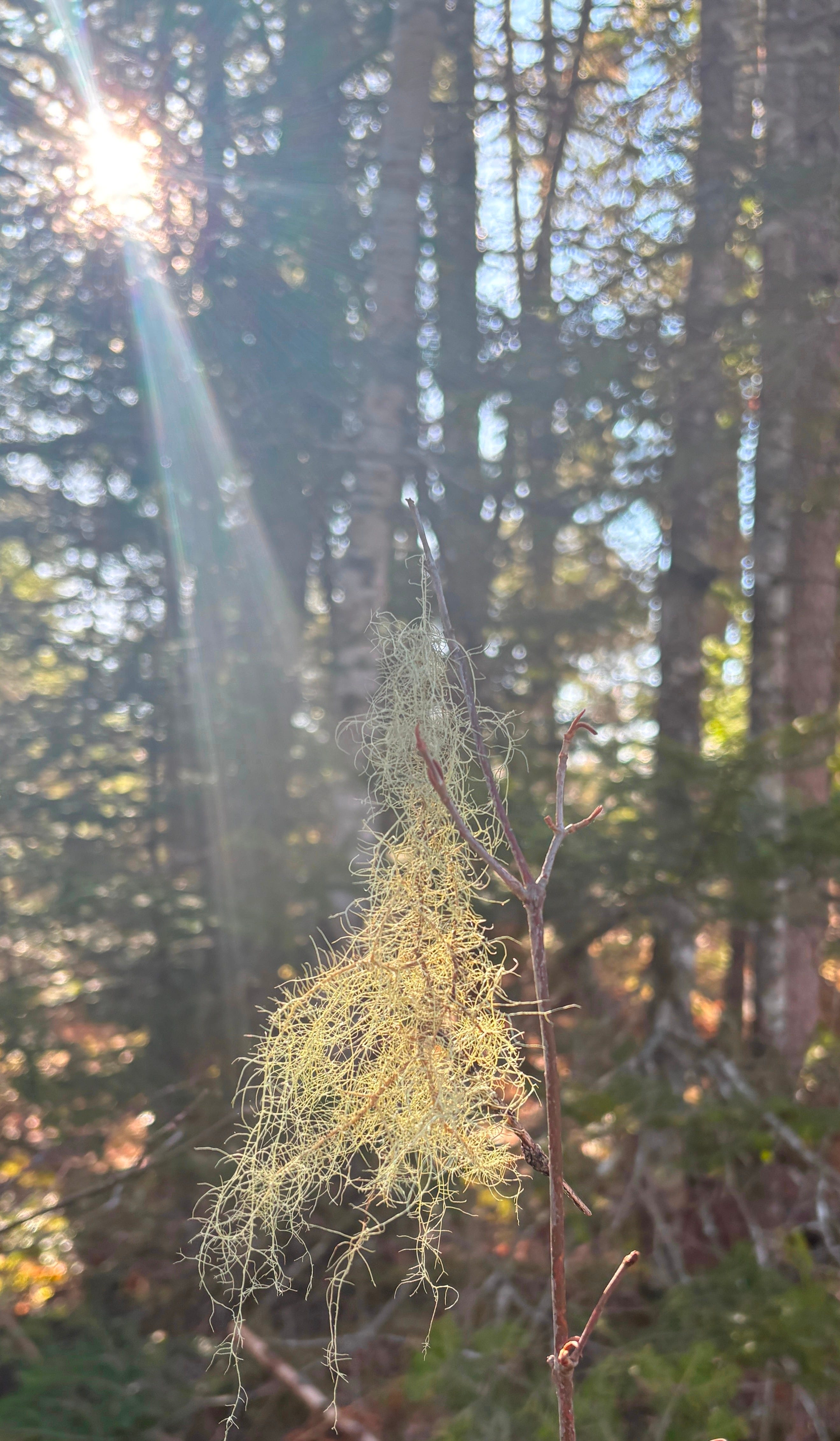
Over the next few reflections I want to linger with a question that sits at the heart of phenomenological inquiry but often causes difficulty for those learning the approach. The question of meaning.
Not meaning in the ordinary sense of explanation or interpretation. Not the kind of meaning that is added after analysis. But phenomenological meaning. The kind of meaning that is already implicit in lived experience and that phenomenological writing seeks to bring into view.
Graduate students frequently reach a moment in their research where they feel they have described an experience carefully but do not yet see what it means. Supervisors encounter the same tension when guiding students through the movement from description toward insight.
This short series of posts explores that threshold. How meaning appears in phenomenological research. How interpretation unfolds. And why meaning is not something we simply add to experience, but something we learn to recognize.
Recalling the Earlier Movements
In recent reflections I lingered with two gestures that feel deceptively simple. Holding back. Turning toward. Reaching. Following. At first glance these may have seemed like dispositions. Attitudes of patience. Postures of restraint. But they were not merely temperamental suggestions. They were methodological commitments.
To hold back is not to hesitate out of uncertainty. It is to resist the premature comfort of explanation. To turn toward is not to fixate on an experience as an object. It is to allow oneself to be addressed by what is given. To reach is to feel the pull of a question that has not yet clarified itself. To follow is to trust that something in the experience knows more than we do at first.
These movements were already gestures toward meaning.
When we hold back, we refuse to add meaning too quickly. When we turn toward, we begin to sense that meaning is not something we construct at will. When we reach and follow, we discover that meaning often appears as something that interrupts us, something that will not let us pass by too quickly.
In my teaching, I see this threshold often. A student brings several pages of careful description. The scene is vivid. The anecdote or vignette is compelling. The details are precise. And then they pause. “I’ve described it,” they say. “But I don’t know what it means. Where do I go from here?”
This moment is not a failure. It is a crossing. It is the place where many assume that interpretation must now be added. They have conducted their interviews. Gathered their lived experience descriptions. What follows, they assume, is that something more intellectual, more abstract, more theoretical or philosophical must be layered onto what has already been written.
But what if meaning is not something we add? What if the earlier gestures, holding back, turning toward, reaching, following, are already the way meaning begins to show itself?
The Throughline
If meaning is not something we add, then what is happening when it begins to show itself?
Over the next few posts I want to stay with this concern in a deliberate way. Not as an abstract debate about interpretation. Not as a theoretical detour. But as a practical and methodological issue for those learning phenomenology, and for those who guide them.
The throughline of this series of posts can be stated plainly:
Meaning in phenomenological research does not get added to description; it arrives and is recognized through careful writing, reading, and interpretive restraint.
This distinction matters.
Adding meaning treats interpretation as an explanatory layer placed on top of description. Description comes first. Analysis comes second. Insight is something we produce once the experiential material has been gathered and organized. Meaning becomes a kind of commentary.
Recognizing meaning assumes something different. It assumes that meaning is already implicit in the lived account, but not yet visible. It requires practices that invite it to stand out or reveal itself. Slowing down the writing. Cutting excess. Isolating a moment. Rewriting in the present tense. Reading aloud. Resisting premature abstraction. Following the detail that carries more weight than it first appears to hold.
Interpretation, in this sense, is not a separate stage. It is a continuation of attentiveness.
In the previous post I described what I called a transactive space. A space between writer, text, and phenomenon. A space in which something begins to happen that is neither purely subjective nor simply given. Meaning does not sit inside the experience as an object waiting to be extracted. Nor does it originate in the will of the researcher. It begins to gather in the movement between attending, writing, rereading, and revising.
In the posts that follow, I want to linger more closely with this gathering. How do we learn to recognize it? What allows something in a description to feel as though it carries more than it first appeared to hold? And why does this recognition often precede our ability to explain it?
Always Too Late
Phenomenology begins from a simple yet unsettling observation. Lived experience is never fully present to us in the moment we attempt to reflect on it.
Even in the first person, what I live through in the immediacy of the now has already begun to recede by the time I turn toward it. Perception takes time. Awareness lags behind sensation. Reflection arrives after what it seeks to understand. We are, in a small but significant way, always too late to our own experience.
I came to feel this most acutely in a study I conducted a few years ago on the experience of taking a pedagogical risk. More specifically, the moment when a teacher abandons a planned lesson because something in the room signals that the plan is no longer viable.
Every teacher knows this moment.
The lesson is prepared. The objectives are clear. The materials are ready. The opening unfolds as expected. And then, gradually, almost imperceptibly, something begins to shift.
A few students start to fidget. A pencil taps more insistently than usual perhaps. Eyes drift toward the window. Shoulders slump. The energy in the room lowers. A student’s brow furrows in confusion. Another glances sideways, disengaged. The teacher presses on for a few more minutes, perhaps repeating an instruction, asking a clarifying question, trying to retrieve the thread.
And then there is a moment.
It is rarely dramatic. No bell rings. No internal voice announces itself clearly. These student reactions and responses can be noticed during all classes. But something gathers. A subtle tightening in the chest. A flicker of unease in the stomach. A heightened awareness that the rhythm of the room is off. The teacher pauses.
“…Okay,” they might say, scanning the room. “You know what? I think we’re going to try something different. Let’s pick up on what we were doing yesterday. We’ll come back to this another day.”
The pivot has occurred.
But what was that moment like?
When I invited teachers to describe this experience, they had vivid stories. Rich vignettes. Concrete circumstances. Yet almost without exception, they moved quickly past the pivot itself. They would explain classroom management strategies. They would describe the new activity and why it worked better. They would reflect on student engagement, curriculum design, professional judgment.
All of that was important. But the phenomenological moment I was seeking kept slipping away.
When exactly did they know something else was being called for?
Was it a decision in the deliberative sense?
Or did their body register the shift before language formed it?
What were the cues? The signs? How were they different from other days?
Often the teachers themselves were unsure. “It just wasn’t working,” they would say. “I just knew.” The shift seemed obvious in hindsight, but elusive when approached directly. The immediacy of the lived moment had already been overtaken by explanation.
The condition of belatedness multiplies. The teacher’s experience had already passed before it was narrated. The narration was shaped by memory. The interview invited reflection. And my reading of the transcript added another layer of distance.
And yet, it is precisely here, in this layered delay, that meaning must be recognized rather than added.
Lingering at the Edge
The difficulty, then, is not that meaning is absent. It is that it does not present itself as an explanation.
In the classroom study, the pivot did not first appear as a concept. It was not labeled “responsive pedagogy” in the moment it occurred. It was felt. A tightening in the chest. A slight quickening of attention. A subtle disharmony in the room.
Otto Friedrich Bollnow describes pedagogical atmosphere as the total joint harmony or disharmony between teacher, students, and classroom. A lived container that exceeds any one individual’s private feelings. The decision to change course was rarely a purely internal calculation. It arose within this shared field. Something in the atmosphere shifted, and the teacher responded.
When I returned to these same transcripts after reading Bollnow, I did not discover new details. The signs were already there. The shifting energy. The unease. The altered rhythm of the room. What changed was not the data, but my capacity to see what was implicit in them. Bollnow’s reflections did not add meaning to the pivot. They allowed its atmospheric character to come into clearer view.
The body often knew before thought caught up.
The work of phenomenological research is not to outrun that immediacy with theory. Nor is it to remain frozen at the level of description. It is to return, patiently, to the edge of the moment and ask what was gathering there before it was named.
This is where writing becomes more than reporting. In rewriting the vignette, in trimming the explanation, in isolating the hesitation, the glance, the felt shift in atmosphere, something begins to stand out. Not because we have added meaning, but because we have allowed what was already sensed to come into view.
For those learning phenomenology, this is often the most disorienting phase. The data are collected. The anecdotes are compelling. And yet the question persists. “What does it mean?” The temptation is to add something. To stabilize the uncertainty with abstraction.
But perhaps the more demanding task is restraint. To linger longer. To follow the detail that resists paraphrase. To trust that recognition may come slowly, and that it may first arrive not as a theory, but as a deepened attunement to what was already there.
In the posts that follow in this series, I will continue to explore this terrain. These reflections may be especially useful for graduate students learning phenomenological research, for faculty supervising such work, and for practitioners who sense that meaning often exceeds the explanations we are quick to provide.
If we are always, in some measure, too late to experience, then our task is not to eliminate that delay. It is to work within it. To read and reread. To write and rewrite. To cultivate the conditions in which what was lived, and perhaps first felt, can begin to show itself again, differently.
In the next reflection, I will turn more directly to this elusiveness itself. Why does lived meaning slip from our grasp? And what does this tell us about the kind of attentiveness phenomenological work requires?
References
Bollnow, O.F. (1989). Pedagogical atmosphere: The perspective of the educator. Phenomenology + Pedagogy, v. 7. https://journals.library.ualberta.ca/pandp/index.php/pandp/article/view/15109
Image. P. Howard. (February 2026).